The Quiet History of the Promenade Bench
Promenade bench history traces how seaside seating changed with public leisure, access and civic care, while showing what the surviving furniture can—and cannot—tell you.
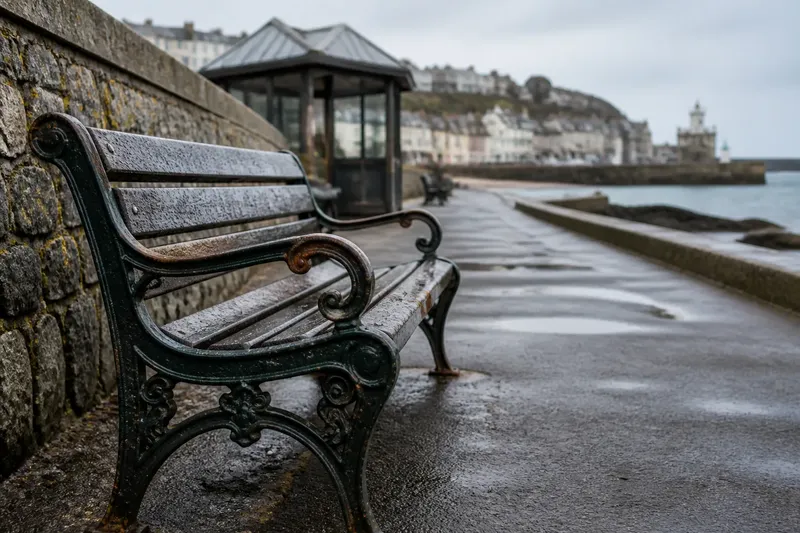
Promenade bench history is easiest to read where an old waterfront path meets its surviving seats. A bench may have been moved, repaired or replaced, so its position offers a clue to how the promenade is used today, not proof of the original plan.
To trace change, look beyond the seat itself. Compare old photographs, maps, council records and local newspaper notices with what remains on the ground. Together, these sources can show when a promenade acquired seating, how its layout changed and which details are still uncertain.
Promenade benches followed the growth of seaside leisure
As seaside towns developed promenades and other public waterfront walks, seating became part of the facilities that supported a visit. A route could serve people passing along the shore; benches also made stopping and watching part of the experience. The furniture belongs to a broader history of public leisure, but a particular bench cannot date that change by itself.
Old images are useful for establishing what was present at a given time. Look for benches in postcards, municipal photographs and paintings, then compare their surroundings with the current site. A recognisable shelter or sea wall can help identify the location even if the seat has disappeared.
Say you find an undated photograph of a seafront with a shelter and a row of benches, and a later council image showing the same shelter beside a widened path. You could mark both layouts on a simple timeline, then search local records for a path-improvement notice. If no record turns up, the images still document visible change, but they do not establish why the path was altered.
Bench layout records changing ideas about the waterfront
Rows of seats, isolated benches and gaps between them make different arrangements for pausing. A row facing the water supports a shared outlook; a seat near a shelter may offer cover; a gap may leave room for a crossing or a clear route. These are observations about the layout, not evidence of the designer’s intention.
Photographs can reveal whether the arrangement changed. Note fixed landmarks, such as a pier entrance, sea wall or bandstand, so that you compare the same stretch rather than similar-looking scenes. If the benches moved but the path stayed much the same, record that as a change in seating position—not as proof of a change in policy.
Access and comfort shaped who could use the seats
Details such as a backrest, armrests, a clear approach and nearby shelter affect how people can use a bench. They are part of the history of public space, though the surviving design cannot tell you exactly who used it or what decision led to its installation.
When inspecting a promenade, record the route to each seat as well as the seat itself. Note steps, slopes, paving condition, obstructions and nearby facilities. A contemporary observation can describe present access; council plans or consultation records may help explain how that arrangement came about.
- Check whether a level route reaches the seat; if it does, record the accessible approach, and if it does not, note the barrier and look for an alternative seat.
- Check for a backrest; if one is present, record it as support for sitting, and if not, describe the seat without assuming why it was chosen.
- Check for armrests; if present, note how they divide the seating space, and if absent, record the uninterrupted seat without inferring a deliberate policy.
- Check whether a shelter stands nearby; if it does, note its position relative to the bench, and if not, record the seat as exposed to the elements.
- Check whether the route beside the bench remains clear; if it does, note that passage is unobstructed, and if not, identify the obstruction and avoid claiming the layout was intended to impede walkers.
- Check for a plaque or maker’s mark; if present, transcribe it and seek a matching local record, and if absent, leave the installation date unconfirmed.
Materials and repairs offer clues, not a complete date
Wood, metal, stone and newer composite materials can help distinguish one seat from another, while replacement slats, fresh fixings or mismatched paint reveal repair. Salt air and weather can alter surfaces, so wear alone is not a reliable way to date a bench.
Describe what you can see: material, construction, visible repairs and any inscription. Then compare those details with old photographs or records. A maker’s plate or dated dedication is a useful lead, but it may refer to a gift or refurbishment rather than the bench’s first installation.
It is not worth assigning an exact age from colour, rust or worn timber. That effort can produce a confident-sounding guess without establishing when the seat arrived. A clear description and a record search are more useful.
Local records can confirm what a bench alone cannot
Useful sources include historic photographs, town plans, council minutes, promenade improvement schemes, maintenance records and local newspaper reports. Libraries, local studies collections and council archives may hold material that is not available online. Search by the name of the promenade, nearby landmarks and terms such as “seating”, “improvements” or “public works”.
Keep observation and interpretation separate in your notes. “Three metal benches face the harbour entrance” is a site description. “The council wanted visitors to watch shipping” is an explanation that needs documentary support. If a record names a project but not its purpose, report that limit rather than filling the gap with an assumption.
What can promenade bench history tell you?
How can I date a promenade bench?
Start with dated photographs, plans, council records or a maker’s mark, and compare identifiable features at the same location. Weathering and style can suggest a line of enquiry but cannot establish an installation date alone.
Do sea-facing benches prove that views were the priority?
They show that the seats face the water now, and images may establish when that arrangement appeared. A claim about the original priority needs supporting records or other reliable local evidence.
Where can I find records of promenade improvements?
Try the local studies library, council archive, historic map collection and local newspapers, using the promenade’s name and nearby landmarks as search terms. If a record is missing, note what the photographs and site can show without treating absence as proof.
What should I record when comparing old and new seating?
Note the location, orientation, material, condition, access and nearby landmarks in each image or site visit. Separate observed changes from explanations, then seek a council or archive record for the reasons behind them.
Promenade bench history depends on careful comparison
For a sound account of promenade bench history, pair a specific seat or layout with dated images and local records. Describe its materials and access, identify changes you can verify, and leave the motive open when the evidence does not settle it. That approach turns ordinary waterfront furniture into a useful trace of civic change without asking it to tell a story it cannot support.