A First Walk Along a Harbour Wall
A first walk along a harbour wall reveals how changes in height and path connections reshape your view, with a simple route for noticing each transition.
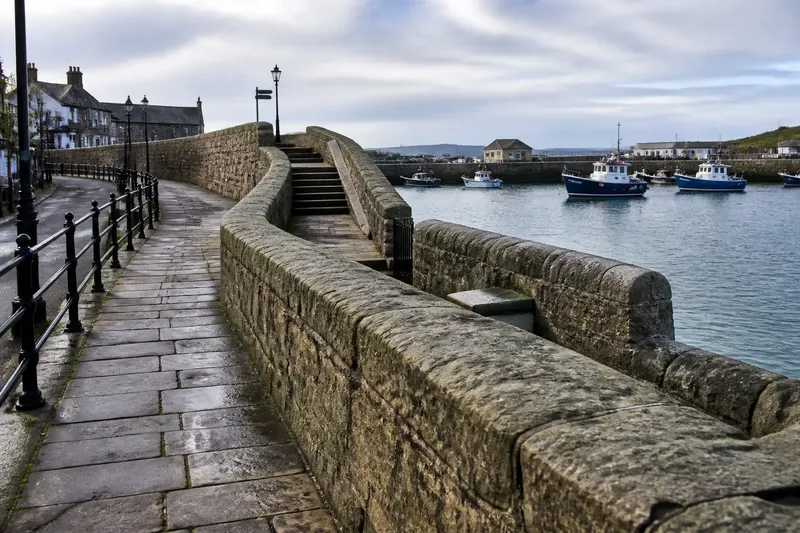
A first walk along a harbour wall is easier to read if you compare its shape with the path beside it. Follow one public stretch and notice how a bend, ramp or junction changes both the ground underfoot and the view across the harbour.
Start where the path and wall meet in clear view
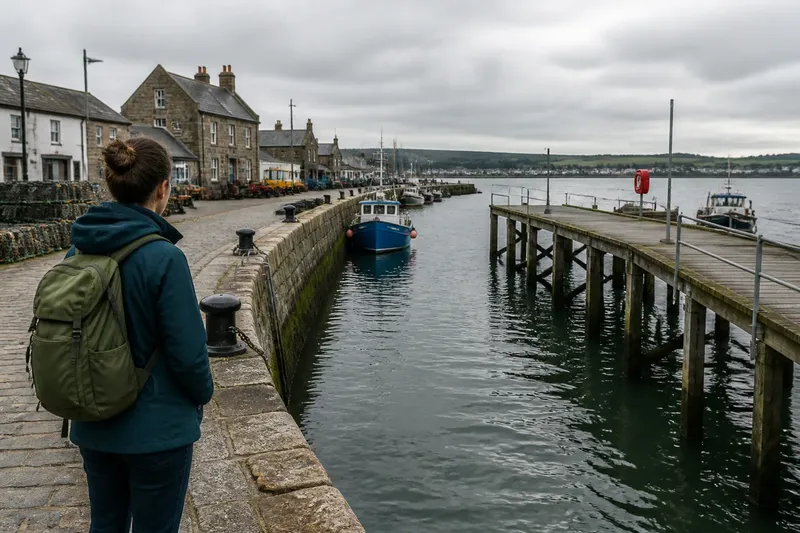
Choose a broad promenade, signed harbour path or public quay approach where you can see the walking surface and the wall together. Look along the wall’s top edge, then compare it with the path: does the path stay level, slope, narrow or meet steps?
Keep to the public side of barriers. Harbour paths can have wet surfaces, vehicle movements and sudden drops. If signs close the route, or the ground is slippery or crowded, turn back or observe from another public viewpoint.
Read the wall’s height against the path
A wall’s apparent height depends on where you stand. If the path rises beside it, the wall may look lower; if the path drops, it can seem taller. A change may also reflect a differently built section or a connection to a larger harbour structure.
Compare the top edge with nearby features such as a gate, steps or lamp post, rather than treating distant objects as a ruler. Turn back briefly and look at the same stretch from the other direction; a slope or raised approach may be easier to see in reverse.
Notice the sequence, not just the most striking point. A low section may lead to a ramp and then a higher stretch beside a lower path. That arrangement shows how the route and harbour edge fit together, but it does not establish why a feature was built.
Follow the path where it joins or turns
Look for a narrow route joining a wider promenade, steps arriving beside the wall, or a path bending inland. At a safe, permitted stopping place, note whether one route continues while another climbs, descends or turns away. Also check whether the wall continues, changes direction, becomes a parapet or meets a building or quay face.
These details help you distinguish a change in the walking route from a change in the harbour edge. Do not treat a gap or gate as an invitation: it may lead to a working area or private property. There is no need to enter a landing or climb onto the wall to follow the layout.
Compare what each transition lets you see
A straight stretch may frame the harbour along the wall; a bend can open a view across a basin or towards moored boats. A rise may reveal more beyond a lower edge, while a descent can bring the waterline or opposite shore closer to eye level.
At a safe public spot, face along the wall and then across the water. Note what has come into view, what is now screened by the wall and whether the path feels more exposed or enclosed. If there is a public branch, compare both directions from the junction before deciding whether to continue.
Say you begin at a public promenade with a low wall and level path, then reach a bend where a short ramp rises to a higher section. If you pause before the bend and again at the ramp’s public landing, the two views should make it easier to connect the change in height and direction with the altered sightline. You can make that comparison without guessing the structure’s purpose.
It is not worth trying to identify every stone or repair on a first pass. Close inspection can distract from the broader pattern and tempt you towards an unsafe or restricted edge. Save detailed questions about materials for a suitable public viewpoint.
What should you check along a harbour wall?
How can you tell whether the wall changes height?
Compare its upper edge with the path surface and nearby fixed features as you walk. If their positions shift relative to one another, note whether the path, wall or both appear to change.
Where is a safe place to pause?
Choose a wide public spot at a bend, ramp landing or junction, away from traffic and the edge. If you cannot stop without blocking walkers or entering a restricted area, keep moving to another suitable viewpoint.
Why does the view change when the path turns?
A turn changes the direction you face, and the wall may screen part of the harbour. If the path also rises or drops, compare how much of the water, moorings or opposite shore is visible from each point.
Should you walk on top of the harbour wall?
Use the top only if it is explicitly marked as a public route and remains open. Otherwise, stay on the designated path and observe the wall from there.
Keep the walk short and the notes specific
Follow one accessible stretch until a clear bend or connection, then return the same way if no safe public continuation is obvious. This keeps the walk focused on one comparison rather than turning it into a search for a complete circuit.
- Check whether the path stays level; if it does, compare the wall’s apparent height along the stretch, but if it slopes, note the slope as well.
- Check whether the wall’s top edge changes in relation to nearby steps or a gate; if it does, record a likely height or ground-level transition, but if it does not, look for a change at the next junction.
- Check whether a route joins, climbs or turns inland; if it does, compare the wall on both sides of that connection, but if access is restricted, observe from the public path and do not enter.
- Check whether the wall continues, bends or meets another structure; if it changes, note where the edge shifts, but if it remains continuous, follow it to the next visible transition.
- Check what is visible from a safe stopping point; if the view opens or closes at a bend, compare it with the view before the bend, but if the spot is crowded, move on and compare from a clearer public place.
- Check signs, barriers and surface conditions before continuing; if the route is open and the ground is suitable, proceed on the public path, but if it is closed or slippery, turn back or choose another viewpoint.
Afterwards, keep three observations distinct: the wall’s apparent height, how paths meet it and what each transition reveals. A note such as “level path, low wall, view across basin; ramp rises at bend” records what you saw without claiming to know the structure’s date or original purpose. A later visit can add another comparison if the route is open and conditions are suitable; for a first harbour wall walk, one clear link between the path’s change and the view is enough.